

Kapihan Session Convenes Media and Biotech Experts for a Dialogue on Agricultural Biotechnology
| |
In an effort to bridge the knowledge gap and curb the spread of misinformation and disinformation regarding agricultural innovation, the International Service for the Acquisition of Agri-biotech Applications, Inc. (ISAAA, Inc.), partnered with the Department of Agriculture’s Philippine Agriculture and Fisheries Biotechnology Program (DA Biotech Program) and successfully hosted Conversations on Agri-biotech: A Kapihan Session with the Media on June 11, 2026 at B Hotel Quezon City.
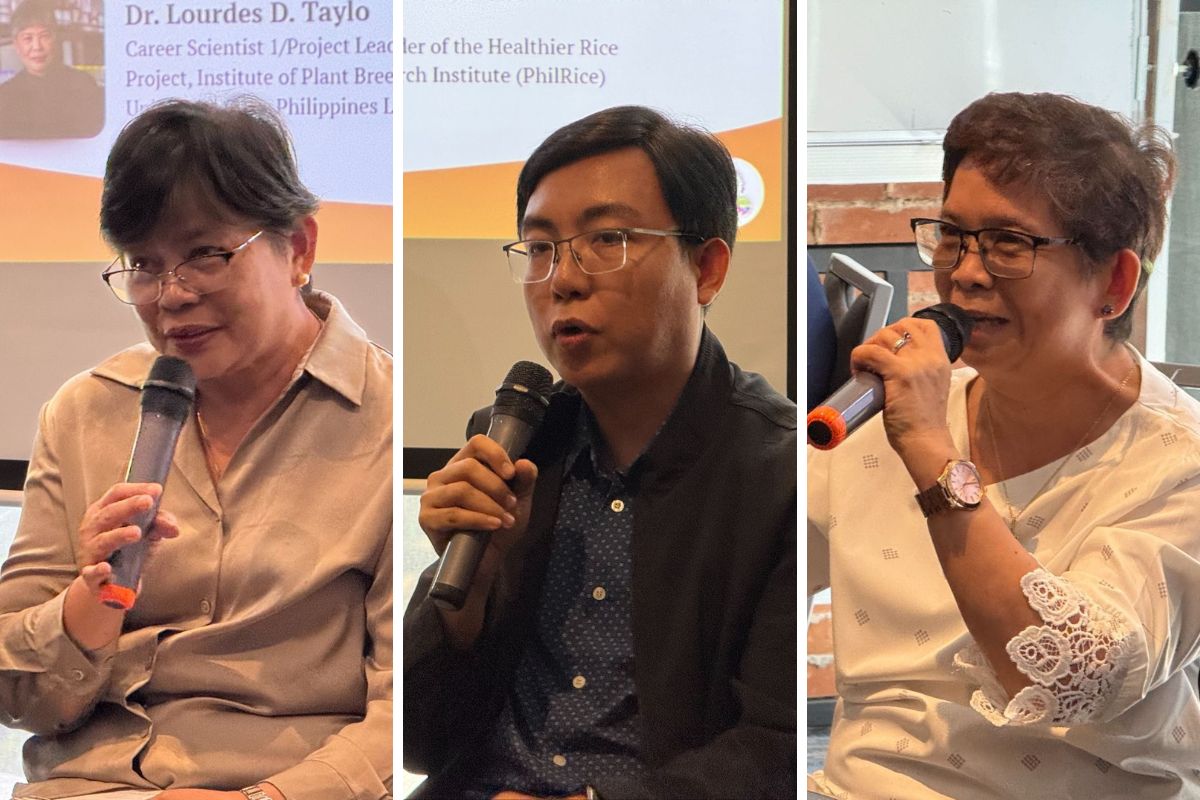
IN PHOTO (L-R): Panel members, Dr. Lourdes Taylo, Dr. Reynante Ordonio, and Ms. Ma. Lorelie Agbagala, at the Conversations on Agri-biotech: A Kapihan Session with the Media.
The event marked the second installment of the Kapihan series that brought together media practitioners from both print and radio media agencies. Representatives included those from the Philippine Star, BusinessMirror, DZXL - Ang Ating Katipunan, Tuklasin Natin, Syensya Na TekNo Pa, Radyo Henyo - DZRH, DA - Agriculture and Fisheries Information Division (AFID), and the Department of Development Broadcasting & Telecommunication, College of Development Communication in the University of the Philippines Los Baños (UPLB).
“As media reports shape public beliefs and opinions, we acknowledge the importance of information literacy on biotechnology to effectively counter misinformation and disinformation. As ISAAA is firmly committed to providing different stakeholders with factual and verified information on biotechnology, we strongly believe that engaging the media can close the knowledge gaps about the technology,” said Mr. Panfilo de Guzman, Senior Associate Scientist at ISAAA Inc.
Dr. Abraham J. Manalo, an Assistant Professor at the University of the Philippines (UP) Diliman and Executive Secretary of the Biotechnology Coalition of the Philippines (BCP), shared compelling, localized data demonstrating the tangible socio-economic benefits of genetically modified (GM) crops in the Philippines. Dr. Manalo highlighted that while agricultural land remains the same, GM corn has significantly boosted national production, yielding an estimated income gain of approximately PHP 70,000 per hectare, according to studies. Furthermore, he highlighted home-grown innovations, known as “Pinoy Biotek,” such as UPLB’s Bt eggplant, Philippine Fiber Industry Development Authority (PhilFIDA)’s Bt cotton, and Philippine Rice Research Institute (PhilRice) and International Rice Research Institute (IRRI)’s Golden (Malusog) Rice and high-iron and zinc rice.
Ms. Ma. Lorelie U. Agbagala, Assistant Scientist at the Department of Science and Technology (DOST) and the Head Secretariat of the National Committee on Biosafety of the Philippines (NCBP), tackled the inherent challenges of reporting on complex scientific topics. Ms. Agbagala urged media practitioners to avoid "red flag reporting traps" such as false balance, exaggeration, and sensationalism. In her presentation on the case of Bt talong and Golden Rice, she emphasized that the words used by journalists directly impact policy outcomes and farmers’ livelihoods.
A dynamic Q&A panel addressed pressing regulatory and local governance issues, specifically concerning local government units (LGUs) that maintain anti-GM ordinances. Dr. Ernelea Cao and Dr. Lourdes Taylo noted that while the Philippines has a rigorous, legally resilient regulatory framework that can withstand judicial scrutiny, community-level engagement remains paramount. Through provincial lecture caravans and multi-sectoral briefings, scientists are actively translating complex technical data into laymanized languages, effectively turning initial skepticism into trust and high demand among local farmers.
Dr. Manalo predicted inevitable growth, greater public acceptance, and the integration of artificial intelligence (AI) within the biotechnology sector in the next decade. To sustain this momentum, stakeholder groups called for continuous public engagement and the eventual enactment of a codified, legislative biotech law.
The session concluded with a call to action from the DA Biotech Program’s Director, Dr. Paul C. Limson, emphasizing that progress must be driven by evidence rather than fear. “We need to continue providing discussion platforms to discuss vital, fact-based conversations, steering the country toward a highly innovative, science-informed agriculture and fisheries sector.”
Visit the media library of the Biotech Media Center for the official photos of the Kapihan session with the media. For more details about this activity, send an email to knowledgecenter@isaaa.org.
| Newer Post | Archive | Older Post |
Science Speaks is ISAAA Inc.'s official blog. Weekly blog articles, authored by ISAAA writers, partners, and invited contributors, aim to help share, disseminate, and promote scientific knowledge and its vital role in achieving global agricultural sustainability and development. Your support to Science Speaks will help us achieve this goal. You can help us by donating as little as $10.