

What 29 Years of Data Reveal About the Impact of Biotech Crops
| |
For nearly three decades, agricultural biotechnology has expanded across the globe, with more and more farmers dedicating land to cultivating biotech crops. This expansion, however, does not come without challenges–shifting policies, climate change, and persistent misinformation. Amidst these challenges, a central question remains: How do the evidence and data at hand describe the real-world impact of biotech/GM crops?
To explore this, ISAAA Inc., in partnership with CropLife Asia, launched a webinar series on the Global Impact of Commercialized Biotech/GM Crops on September 17, 2026. The webinar brought together 425 individuals from diverse backgrounds, including the academia, government, the private sector, industry, and research institutions from all over the world to unveil longitudinal data and examine not only how widely biotech/GM crops have been adopted, but also what this adoption has meant for farmers, the environment, and the future of agricultural biotechnology.
How far have biotech/GM crops expanded globally?
Dr. Rhodora Romero-Aldemita, Executive Director of ISAAA Inc., set the stage by presenting the latest trends on commercial adoption of biotech/GM crops across global markets. From 1996 to 2024, biotech/GM crops have been approved and adopted in 73 countries, reaching a massive accumulated planted area of 3.48 billion hectares.
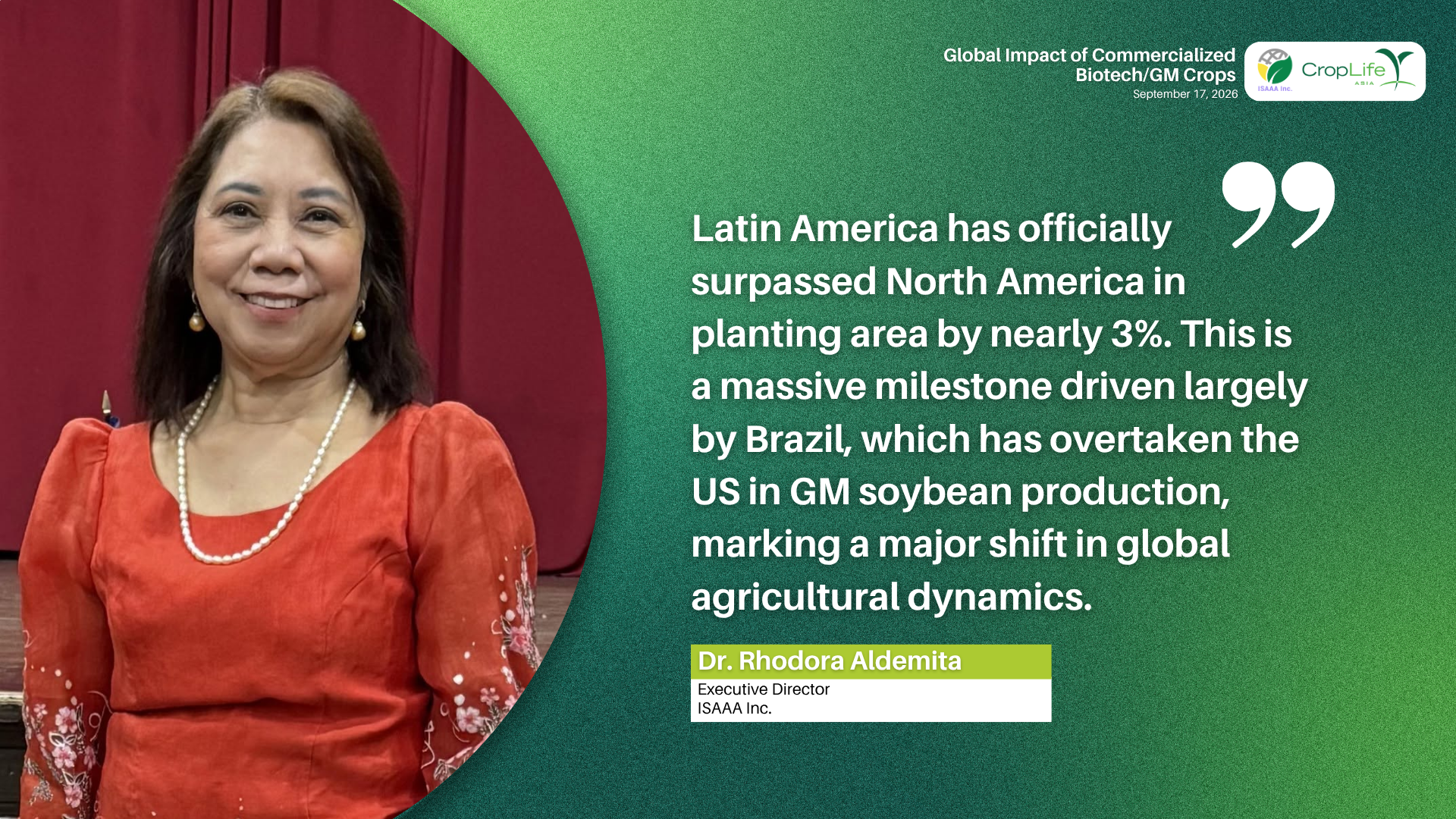
Beyond major commodities like soybean, maize, cotton, and canola, adoption has expanded into specialty food crops like Bt eggplant, papaya, and sugarcane, as well as industrial innovations like GM eucalyptus. More importantly, she emphasized a defining shift: developing regions now account for the majority of the global cultivated area of biotech crops. Dr. Aldemita noted that Latin America has officially surpassed North America in planting area by nearly 3%. This is a massive milestone driven largely by Brazil, which has overtaken the US in GM soybean production, marking a major shift in global agricultural dynamics.
This shift underscores that biotech/GM crops are moving beyond their initial concentration in a few major economies, as more developing countries turn to the technology for its potential to address their agricultural needs and deliver economic benefits.
What Does 29 Years of Evidence Reveal About the Impact of Biotech/GM Crops?
Building on the global adoption roadmap in ISAAA Brief 57: Global Status of Commercialized Biotech/GM Crops in 2024, agricultural economist Graham Brookes of PG Economics presented peer-reviewed data showing the massive economic and environmental returns of crop biotechnology over the last 29 years.
Economically, his analysis revealed that for every dollar spent on seed for biotech crops, farmers gained an average return on investment of $4.90 in extra income, boosting cumulative global farm revenues by $385 billion US dollars, with over half going to farmers in developing nations.
Furthermore, through traits such as insect resistance and herbicide tolerance, biotech crops enabled the adoption of no-till practices and reduced tractor fuel consumption, thereby preventing up to 387 billion kg of CO2 emissions. These traits also reduced the use of pesticide active ingredients by 867 million kg, cutting agricultural environmental impacts by 15.3%.
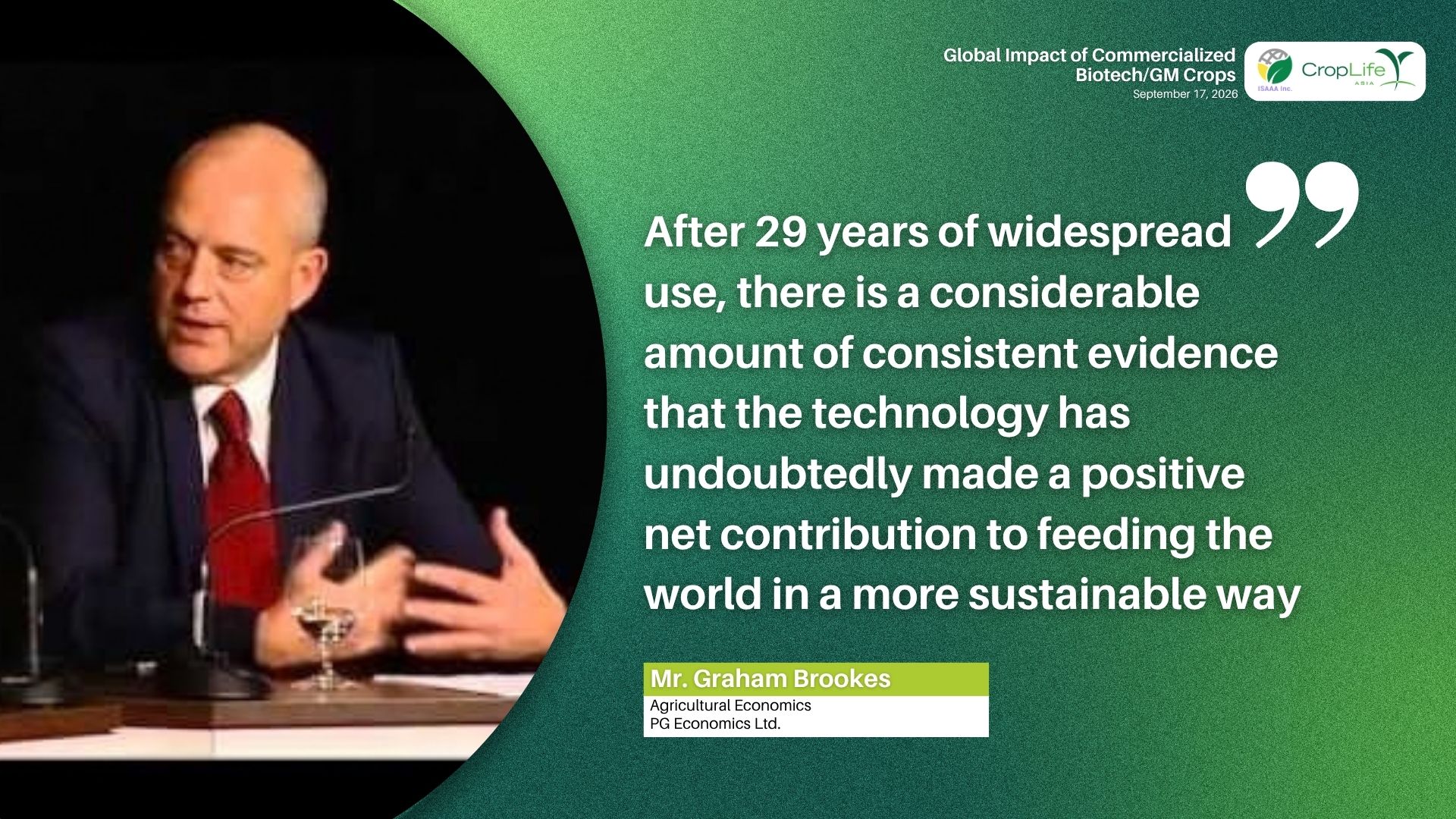
Summarizing why farmers worldwide consistently embrace the technology, Mr. Brookes stated that after 29 years of widespread use, there is a considerable amount of consistent evidence that the technology has undoubtedly made a positive net contribution to feeding the world in a more sustainable way.
Taken together, these figures illustrate that the impact of biotech crops extends beyond yield or farm-level returns, with adoption also affecting production costs, farm practices, and resource use over time.
What Will Drive the Next Phase of Biotech Crop Adoption?
Unlocking the full potential of plant biotechnology in the coming decades requires pairing scientific innovation with proactive communication and regulatory alignment. The 29-year record, however, shows that evidence is only one side of the equation. Translating that evidence into public understanding, workable policies, and timely access is another variable that can shape the outcome.
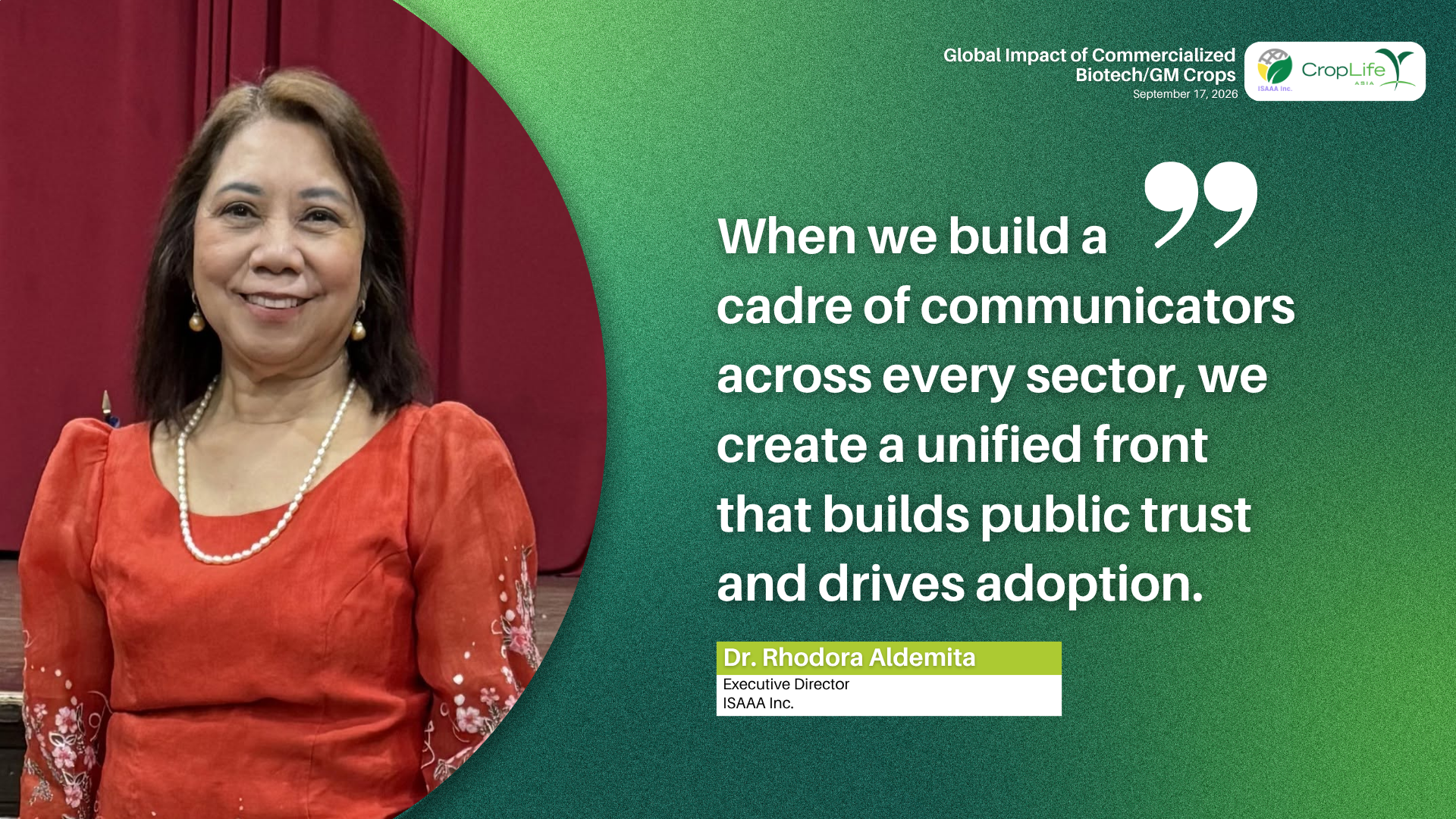
With this, Dr. Aldemita mentioned that expanding adoption depends on building public confidence through coordinated science engagement across all sectors. Dr. Aldemita emphasized that when we build a cadre of communicators across every sector, we create a unified front that builds public trust and drives adoption.
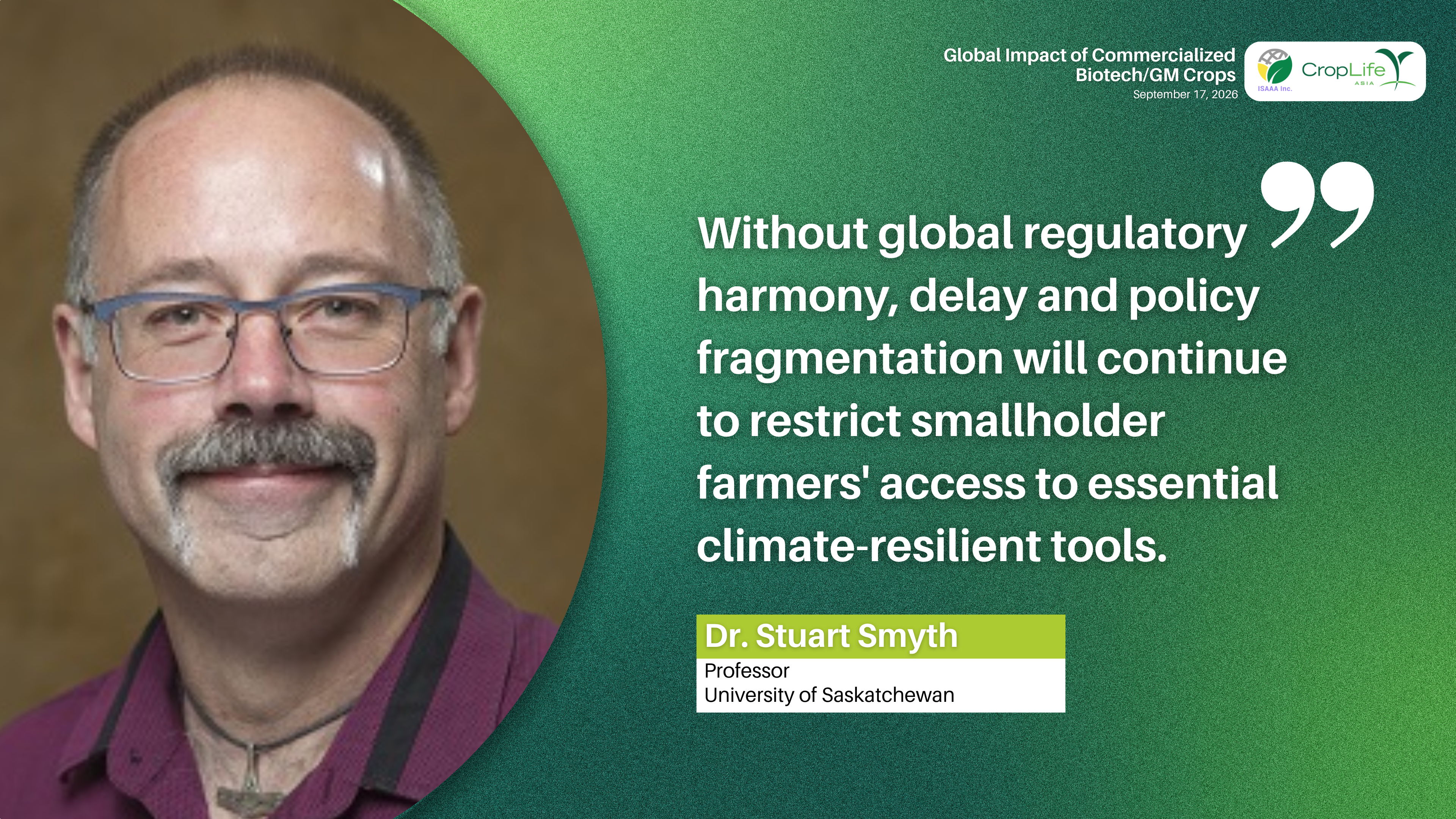
Complementing this need for public engagement, Dr. Stuart Smyth, a Professor at the University of Saskatchewan, addressed the necessity of predictable policy frameworks. He highlighted that while nearly three decades of empirical evidence prove the safety and socio-economic value of agricultural biotechnology, regulatory hurdles and political friction remain significant barriers to scaling modern gene-editing tools. To ensure these innovations reach resource-poor farmers and strengthen global food security, Dr. Smyth stresses that without global regulatory harmony, delay and policy fragmentation will continue to restrict smallholder farmers' access to essential climate-resilient tools.
The 29 years of evidence show a clear record that biotech crops deliver tangible, long-term benefits to farmers, the environment, and global food security. To ensure that the years ahead deliver even greater progress, science must be paired with clear communication, harmonized regulation, and strengthened collaboration to drive the next era of agricultural biotechnology for sustainable agriculture.
Watch the full webinar on YouTube to learn more.
| Archive | Older Post |
Science Speaks is ISAAA Inc.'s official blog. Weekly blog articles, authored by ISAAA writers, partners, and invited contributors, aim to help share, disseminate, and promote scientific knowledge and its vital role in achieving global agricultural sustainability and development. Your support to Science Speaks will help us achieve this goal. You can help us by donating as little as $10.