GLOBAL
PLAN FOR FOOD SAFETY, ANIMAL AND PLANT HEALTH ASSISTANCE AGREED
Developing countries will soon receive assistance in implementing internationally agreed standards for food safety and animal and plant health, after international organizations, donors and representatives of beneficiary countries approved a new medium-term strategy to strengthen the Standards and Trade Development Facility (STDF).
The STDF was created in 2002 as a trust fund by five organizations: the United Nations Food and Agriculture Organization (FAO), the World Bank, the World Health Organization (WHO), the World Organization for Animal Health (OIE) and the World Trade Organization (WTO). The new strategy for the STDF aims to advance capacity-building efforts. It places much greater emphasis on the facility acting as a vehicle for coordination, fund mobilization and the identification and dissemination of best practice in the provision of sanitary and phytosanitary (SPS)-related technical cooperation and capacity building.
Developing countries are expected to gain and maintain market access, and improve domestic human, animal and plant health standards through this joint effort.
The news release can be accessed at http://www.fao.org/newsroom/en/news/2006/1000470/index.html.
GM COTTON AND SUGAR BEET CERTIFIED REFERENCE MATERIALS
The Institute for Reference Materials and Measurements (IRMM) recently released reference materials for the analysis of genetically modified (GM) cotton seed and the sugar beet H7-1 (ERM-BF419).
The GM stacked cotton event, developed by Dow AgroSciences has been genetically engineered to contain two new proteins which provide resistance against certain lepidopteran pests, and another protein which served as a selectable marker during the development of the biotech cotton variety.
The GM sugar beet event H7-1, on the other hand, was jointly developed by Kleinwanzlebener Saatzucht (KWS) and Monsanto. The sugar beet H7-1 contains the epsps gene isolated from a strain of the microbium Agrobacterium. The EPSPS protein provides tolerance to Roundup® herbicides containing glyphosate.
Read the complete releases at http://www.irmm.jrc.be/html/news/news
/new_rm_GM_cotton_dec06.htm and http://www.irmm.jrc.be/html/news/news
/new_rm_GM_sugar_beet_dec06.htm.
DUPONT INCREASES PLANT BIOTECH INVESTMENT
Dupont Agriculture and Nutrition will increase investment in plant genetics, biotechnology and other high-value growth opportunities. It will reinvest US$100 million from savings into the seed business which hopes to cash in on next-generation biotech traits.
The company expects increased seed orders fro 2007 planting, particularly corn hybrids with “triple stacks”. Already, Dupont has exceeded the US$ 1 billion mark in 2006 in Latin America, particularly with its corn, soybean and soy protein products. Continued investment in the markets of Brazil, Eastern Europe/Russia, India and China is projected for all businesses.
For additional information see http://pioneer.mediaroom.com/index.php?s=press_releases&item=214.
AFRICA
ROLE OF BIOTECH IN NATIONAL DEVELOPMENT REVIEWED
Biotechnological tools have been used to provide food and contribute to socio-economic advancement and national development, says Nigerian scientists Iheanyi Okonko and colleagues.
Their review, published by the African Journal of Biotechnology, provides an overview of the status of plant, animal, and microbial biotechnologies, as well as possible applications in developing countries.
Okonko and colleagues stressed that biotechnology innovations have specifically contributed a lot to food processing. Among its contributions include the enhancement of product quality and safety, and in providing improved ingredients and raw materials.
However, some of the issues in developing countries need to be addressed. These include intellectual property rights, cultural factors, and the appropriateness of the technology in a developing country setting. More importantly, developing countries should weigh up their investments in biotechnology against other potential uses of these resources.
The review paper can be accessed at http://www.academicjournals.org/AJB/PDF
/pdf2006/4Dec/Okonko%20et%20al.pdf.
NIGERIANS STAND TO GAIN A LOT FROM BIOTECHNOLOGY
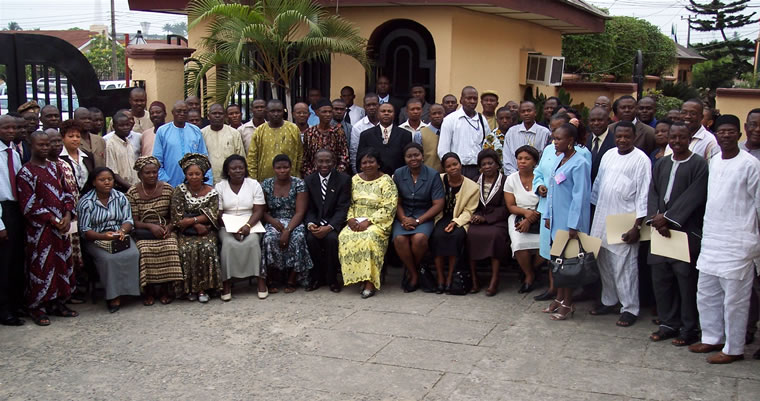
Biotechnology could easily provide good jobs for millions of unemployed Nigerians under the biotechnology bioresources programs, said Sam Wuyep a director at the Nigerian Biotechnology Development Agency (NABDA), Abuja, during a biotechnology awareness workshop on Thursday 14th December, 2006. Bamidele Solomon, Director General of NABDA added that the government should as a matter of priority initiate steps to explore the use of biotechnology for the benefit of Nigerians and thus ensure that the country becomes one of the global leaders in the field.
Most importantly, modern agricultural biotechnology applications are an essential tool for agricultural development for food security, income generation and poverty alleviation. Christian Fatokun, from the International Institute of Tropical Agriculture (IITA), explained that in spite of several years of research work it has become impossible for IITA and other advanced laboratories to develop improved cowpeas and cassava resistant to certain pests and diseases through conventional breeding. Fatokun added that IITA has acquired the knowledge to use biotechnological tools to improve cowpea and other crops without the use of environment unfriendly pesticides.
The workshop was organized by IITA in collaboration with the Cross River State Ministry of Agriculture and NABDA, the workshop was sponsored by the United States Agency for International Development (USAID).
For more information contact Taye Babaleye at t.babaleye@cgiar.org Visit IITA’s website at http://www.iita.org.
THE AMERICAS
ARS DEVELOPS LOW-PHYTATE WHEAT
The Agricultural Research Service (ARS) of the United States Department of Agriculture has developed low-phytate breeding lines of wheat which can produce flour with 25 times more magnesium than commercial varieties. Low levels of phytic acid may also increase the uptake of magnesium by humans and animals. Magnesium deficiency has been linked to health problems like osteoporosis and Type 2 diabetes.
Researchers led by Edward Souza said that the development of low-phytate wheat is a natural way to improve nutritional content of the grain since magnesium is not usually added to refined flours.
View this article at http://www.ars.usda.gov/is/pr. Four papers on various aspects of low-phytate grains are available online at http://crop.scijournals.org/cgi/content/full/46/6/2403.
GM TOBACCO WITH INSECTICIDAL PROPERTIES
Researchers at the University of Florida Institute of Food and Agricultural Sciences have genetically modified a tobacco mosaic virus to make it produce a natural, environmentally friendly insecticide which can kill pests that consume the inoculated plant’s leaves.
The tobacco mosaic virus on its own is known to cause severe crop losses. It attacks not only tobacco, but also other plants in the Solanaceae family – including tomatoes, eggplants, bell peppers and potatoes. It causes mottling and discoloration of the leaves, and it can cause death. However, the genetically modified virus contains a chemical known as trypsin-modulating oostatic factor, or TMOF. This chemical is a hormone produced by the ovaries of female mosquitoes, and it stops insects from producing a crucial digestive enzyme called trypsin. As a result, the insects starve to death, as they become unable to draw nutrients from food.
Harvested plants infected with the modified virus can be processed to make mosquito control products.
For the full news article visit http://news.ufl.edu/2006/12/12/virus.
BRAZILIAN AG MINISTER TO APPEAL AGAINST GM MAIZE STATE BAN
Luis Carlos Guedes Pinto, Brazilian Minister for Agriculture, Livestock and Food Supply, has announced that the government will appeal to the General Law of Union (Advocacia Geral da União- AGU) to revert the decision of the Federal Justice of the Paraná banning the commercial release of biotech maize in the state. The ban was requested by NGO Terra de Direitos (Land of Rights), the Brazilian Institute of Defense of the Consumer (Idec), and the Appraisal and Services in Alternative Agriculture Projects (AS-PTA), on the grounds that no public consultation had taken place on the commercial release of the genetically modified (GM) crop.
According to the Minister, there is no need for public consultation as the biotech crop had already received approval by Brazil's National Technical Committee on Biosafety (CTNBio). “We strongly invest in science and technology so that our agriculture is increasingly sustainable over time, from social and environmental points of view, and to increase its competitiveness. Decisions like this one harm the development of Brazilian agriculture,” said Guedes Pinto.
Read the full news at: http://www.agenciabrasil.gov.br/noticias/2006/12/15/materia.2006-12-15.0119778636/view
PEW INITIATIVE: BIOTECHNOLOGY AND THE WINE INDUSTRY
The Pew Initiative on Food and Biotechnology and the American Vineyard Foundation held a workshop in San Francisco, California to examine issues relating to the potential adoption of biotechnology in the winegrape and wine industries. Grape growers, winemakers, grape and yeast research scientists, federal and state government representatives and agricultural commodity and specialty crop producers took part in the event to discuss the scientific, regulatory and marketing issues associated with the potential development of genetically engineered (GE) winegrapes.
Some of the key issues tackled in the proceedings include:
- The advantages in production for winegrape growers and vintners that may be realized using agricultural biotechnology, which must be balanced against the need to ensure environmental and food safety.
- The willingness of wine consumers, particularly those in overseas markets, to embrace products derived from biotechnology.
- The timely discussions on GE yeasts for use in winemaking that have already been developed, and have successfully undergone regulatory scrutiny in the U.S. and Canada, and are ready for commercialization.
An overview of the conference agenda and the full paper from the workshop can be viewed at: http://pewagbiotech.org/events/0709
ASIA AND THE PACIFIC
NO TO CORN FOR BIOFUEL, SAYS CHINA’S AG MINISTRY
China’s Ministry of Agriculture (MOA) said this week that it is not supporting the use of corn and grain crops for biofuel production until it is able to provide enough food for the country’s 1.3 billion people and feed for its livestock industry.
MOA is instead encouraging the people to grow sorghum, cassava and other non-grain crops on areas that are unfit for grain production. This will keep the current grain growing areas devoted to food and feed production.
China is still committed to substantially raising the share of ethanol and other cleaner-burning substitutes in the coming years. MOA has been testing the production of biofuels on small-scale initiatives using non-grains. It also has approved several projects to develop new types of non-grain plants specifically for use as biofuels.
The complete article is at http://www.chinadaily.com.cn/bizchina/2006-12/18/content_761025.htm.
GM TORENIA’S TRIALS APPROVED IN AUSTRALIA
The Gene Technology Regulator (the Regulator) has made a decision to issue a license in respect of application DIR 068/2006 from Florigene Pty Ltd. The company has received approval for the limited and controlled release of up to nine lines of genetically modified (GM) torenia (a widely grown ornamental plant) with altered flower color. The trial will take place at a single site of up to 100 square metres in the City of Darebin, Victoria, from October 2007 to May 2008 under limited and controlled conditions.
See the full article at http://www.ogtr.gov.au/ir/dir068.htm.
EUROPE
HUNGARY APPROVES “COEXISTENCE REGULATION”
The Hungarian Parliament has approved the country’s “coexistence regulation”, officially known as the Amendment of the Act on Gene Technology Activities. The new regulation imposes a “de facto” ban on biotech production due to neighbor consent requirements and excessive isolation distances.
The United States Department of Agriculture Foreign Agricultural Service Grain Report adds that deliberations in the Parliament have heightened discussions and activities from different sectors in society. These include a farmers’ forum on crop varieties bred by gene technology; and a Parliament conference on the agricultural gene technology – first generation genetically modified plants. While opposing issues were raised, sectors voiced the need for biotechnology research in the country.
See the Gain Report at http://www.fas.usda.gov/gainfiles/200612/146269779.pdf.
EFSA OPENS PUBLIC CONSULTATION ON GMO FEEDING TRIALS
The European Food Safety Authority recently launched a public consultation on the use of animal feeding trials to assess the safety and nutritional value of genetically modified (GM) food or feed. This aims at providing further guidance on risk assessment approaches for GM food and feed. According to the GMO Panel, any risk assessment of GM food/feed should first consider whether initial studies using in silico and in vitro approaches may answer some of the safety questions and indicate whether there is a need for subsequent in vivo studies, such as animal feeding trials.
Comments are invited by January 31, 2007 on the consultation on animal feeding trials, which is available at http://www.efsa.europa.eu/en/science/gmo
/gmo_consultations/gmo_AnimalFeedingTrials.html. The full article can be read at the EFSA website: http://www.efsa.europa.eu/en/press_room
/press_release/pr_gmo_feeding.html.
IMPLICATIONS OF BIOTECH CROPS ON GENETIC CONSERVATION
Many are concerned that the increasing production of biotech crops poses potential problems to biodiversity through gene flow and subsequent introgressions of transgenes. To address this, scientists from Bioversity International (previously known as the International Plant Genetic Resources Institute or IPGRI) and CATIE (Tropical Agricultural Research and Higher Education Center) have assessed the potential impact on the genetic diversity in genebanks and farmers’ fields.
Jan Engels and colleagues wrote in their paper, published by the journal Genetic Resources and Crop Evolution, that precautionary measures have to be taken to mitigate these risks. There is also a need for effective and efficient plant genetic resources conservation efforts. The scientists urged that germplasm curators should conduct routine evaluation to determine the integrity of landraces and crop wild relatives in genebanks. Engels and colleagues used the Central American and Mexican centers of crop genetic diversity as a “case study”.
Their recommendations include: increasing the awareness on the potential risks related to the release of transgenes into centers of crop origin or diversity, and involving an international seed organization (such as the International Seed Testing Association -ISTA) to oversee seed testing and guarantee the adoption of standards on the acceptable level of transgenes in conventional seeds.
The abstract, with links to the full paper for subscribers, is available at http://www.springerlink.com/content/p14600008n77t276.
NEW METHODS TO HELP IN RE-SEQUENCING GENOMES
DNA sequencing has provided the reference sequence information for many organisms, including many plant species. This has spawned many new studies on determining genetic variation to understand evolution, pathogenicity, and complex diseases. Thus, scientists are re-sequencing those genomes that have been sequenced before.
David Bentley wrote in a review, published by the journal Current Opinion in Genetics and Development, that re-sequencing is an essential biological research activity for studying genes, genetic variation, and gene function. However, re-sequencing has been limited until now by cost and throughput levels of the current technologies.
New methods are however already in different stages of development. These are expected to significantly bring down the cost of obtaining nucleotide sequences. Bentley’s review discusses the new methodologies that can be used. These include: microelectrophoresis, sequencing by hybridization, sequencing by synthesis on arrays, and single nucleotide sequencing. These methods are expected to provide the same (or higher) accuracy and throughput as the current methodology of sequencing.
The abstract, with links to the complete review paper for subscribers, is available at http://dx.doi.org/10.1016/j.gde.2006.10.009.
TILLING FOR PLANT BREEDING
TILLING (Targeting Induced Local Lesions in Genomes) is a general reverse-genetics strategy that is used to locate induced point mutations in genes of interest. This genetic technique has found applications in both model organisms and economically important plant and crop species.
Chinese scientists have reviewed why TILLING is a powerful tool for gene discovery, analysis of DNA variation, and plant improvement. De-Kai Wang and colleagues wrote in their paper that among the advantages of the method is the simplicity in its methodology, requiring no complicated manipulations and expensive apparatus. Also TILLING has high sensitivity, and high efficiency in detecting mutations.
For plant improvement, Wang and colleagues note that TILLING has two immediate applications: a) as a tool for detection of genetic loci that are putatively associated with agronomically important traits, and b) as a tool in establishing a large collection of alleles at genetic loci for the traits of interest.
The review, published by the journal Acta Genetica Sinica, can be accessed by subscribers at http://dx.doi.org/10.1016/S0379-4172(06)60130-3.
| A
N N O U N C E M E N T S |
94th INDIAN SCIENCE CONGRESS 2007
“Plant Earth” is the theme of the 94th Indian Science Congress 2007 at the Annamalai University, Chidambaram, Chennai from 3-7 January 2007. The Indian Science Congress is organized annually under the patronage of the Indian Science Congress Association, Kolkatta. The Congress will deliberate on issues of natural disasters, climate change and environmental pollutions that are threatening society.
For detail information, contact Dr Harsh Gupta at: iscacal@vsnl.net or visit http://www.annamalaiuniversity.ac.in/isca/isca.htm
EMAIL CONFERENCE ON WATER SCARCITY AND AGRI-BIOTECH
The FAO Electronic Forum on Biotechnology in Food and Agriculture will have its 14th email conference on 5-30 March 2007. The provisional title is “Coping with water scarcity in developing countries: What role for agricultural biotechnologies?”. FAO’s biotech forum aims to provide quality balanced information on agricultural biotechnology in developing countries and to make a neutral platform available for people to exchange views and experiences on the subject. Registration is free and is open to everyone. For more information and for instructions on how to register please visit http://www.fao.org/biotech/forum.asp.
INTERNATIONAL CONVENTION ON GLOBALIZATION AND RURAL DEVELOPMENT 2007
Protsahan, a non-governmental and non- profit organization located in Nagpur, India, is organizing the 2nd International Convention on Globalization and Rural Development (ICGRD 2007) at the World Trade Center, Mumbai from 9-10th Feb 2007. The program is supported by the Rural Development Institute, Washington, USA. Topics to be discussed include: globalization and common property resources, future of farmers in developing countries, the existing and the upcoming subsidy structure and the importance of micro-finance, and implications for the rural health and education sector.
Contact Dr Dhiraj Kumar at: icgrd@yahoo.co.in or visit http://www.icgrd2007.org for more information.
ASSS 4th INTERNATIONAL CONFERENCE
The African Soil Science Society (ASSS) will hold its 4th International Conference on January 7 to 13 2007 at the Ghana Institute of Management and Public Administration (GIMPA) Accra, Ghana. The conference theme is “Impacts of climate change, global trade, urbanization and biotechnology on land use in Africa”. The conference aims togather specialists interested in land use and sustainable land management in Africa, to deliberate on serious emerging issues such as climate change, global trade and biotechnologies including uses of genetically modified organisms.
Visit http://www.asssonline.org/events.htm for more information and downloadable documents concerning the conference.
US ANNUAL MAIZE GENETICS CONFERENCE
The 49th Annual Maize Genetics Conference is scheduled to be held at St. Charles, Illinois, U.S.A. on 22-25 March 2007. The annual activity brings together researchers and students to discuss progress in maize research areas such as genetics, plant breeding, biotechnology, and genomics. The deadline for the submission of abstracts is on 2 February 2007.
Details about the program and information on how to obtain financial aid for student attendees are available at http://www.maizegdb.org/maize_meeting/2007.
SYMPOSIUM ON GENE SILENCING
The 24th Symposium in Plant Biology with the theme "Gene Silencing: The Biology of Small RNAs and the Epigenome" is to be held on 18-20 January 2007 in Riverside, California, U.S.A. The symposium is designed for students and scientists studying small RNAs and chromatin from different perspectives – plant, animal, genetic, molecular, biochemical, and cell biological. The meeting will highlight recent advances and identify emerging questions to be addressed for dissection of small RNA biology and epigenetic regulation.
For more information please visit http://cepceb.ucr.edu/symp/index.php.
|