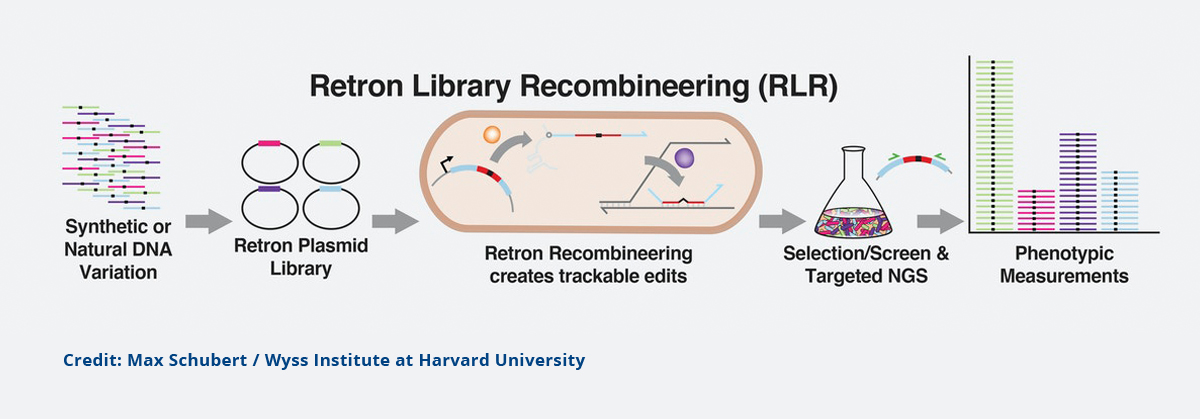
"Move over CRISPR, the retrons are coming!" Researchers at the Wyss Institute for Biologically Inspired Engineering at Harvard University and Harvard Medical School (HMS) have created a new gene editing tool called Retron Library Recombineering (RLR) that enables millions of genetic experiments to be performed simultaneously.
The European Commission has published a study on new genomic techniques (NGTs) that shows the techniques have the potential to contribute to a more sustainable food system as part of the objectives of the European Green Deal and the Farm to Fork Strategy. The study also finds that the current GMO legislation adopted in 2001, is not fit for purpose for these innovative technologies. The Commission will now start a wide and open consultation process to discuss the design of a new legal framework for these biotechnologies.
A study conducted at the University of York has confirmed that genetically modified (GM) switchgrass detoxifies residues of the military explosive RDX, left behind on live-fire training ranges, munitions dumps, and minefields. RDX has been used on munitions since WW2 and its use has now resulted in widespread groundwater pollution.
Researchers from Korea's National Institute of Agricultural Sciences conducted a study using gene editing technology to generate bialaphos-resistance (bar)-knockouts in herbicide tolerant rice and identify effects resulting from off-targets.