

Researchers Discover Key Gene for Wild Rice Perennial Growth
April 15, 2026| |
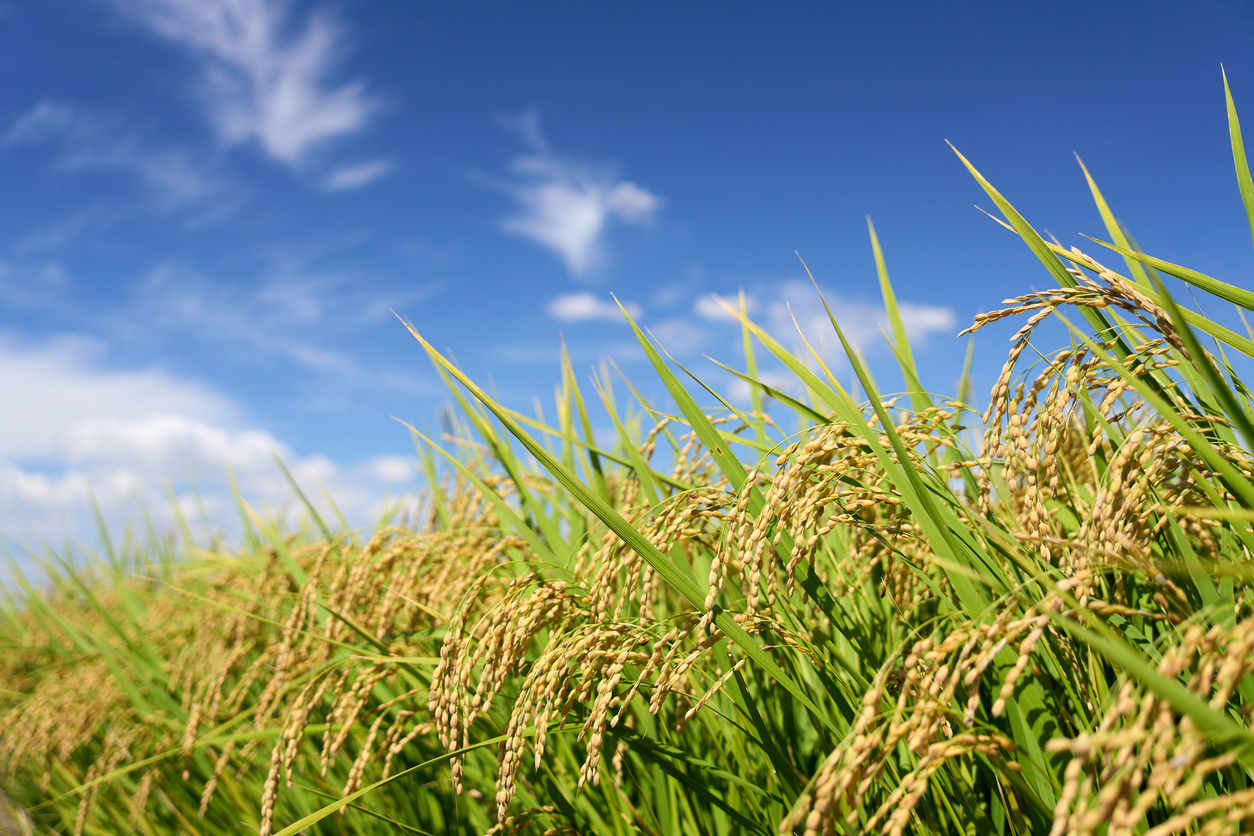
Researchers from the Chinese Academy of Sciences (CAS) have identified a key genetic mechanism that allows wild rice to grow perennially. In a study published in Science, a team led by Han Bin and Wang Jiawei from the Center for Excellence in Molecular Plant Sciences cloned Endless Branches and Tillers 1 (EBT1), a key gene that determines whether wild rice grows as a perennial.
The research reveals that the EBT1 locus, which consists of two microRNA genes (MIR156B and MIR156C), acts as a developmental "age switch." While these genes typically decrease as a plant matures to trigger seed production, they are uniquely reactivated in the buds of wild rice after flowering. This epigenetic resetting allows the plant to undergo a developmental reversion, regaining its ability to produce new vegetative branches and roots even after its seeds have matured. This clonal growth allows the wild rice to spread and survive year after year, unlike the annual cultivated rice used in modern farming.
Beyond its evolutionary significance, the study highlights how early farmers inadvertently eliminated this perennial trait during domestication to favor higher-yield, more compact plants. By successfully recreating this weedy growth pattern in experimental lines, the researchers demonstrated that the perennial lifestyle can be restored. These findings provide critical genetic resources for developing ratoon rice and other perennial crops, which could significantly reduce the labor and environmental costs associated with annual planting while maintaining food security.
For more details, read the research news on the CAS website.
| |
You might also like:
- Researchers Discover Longevity Gene in Plants
- Researchers Say Perennial Biofuel Crops Could Use Same Water as Corn in Humid Climates
- Work on Perennial Grain Crop to Boost Potential Biofuel Use
Biotech Updates is a weekly newsletter of ISAAA, a not-for-profit organization. It is distributed for free to over 22,000 subscribers worldwide to inform them about the key developments in biosciences, especially in biotechnology. Your support will help us in our mission to feed the world with knowledge. You can help by donating as little as $10.
-
See more articles:
-
Plant
- Japan and Brazil Grant Green Light to Non-browning Banana
- Scientists Use CRISPR to Reduce Histamine in Tomatoes
- EFSA Confirms Safety of GM Oilseed Rape MS11
- Researchers Discover Key Gene for Wild Rice Perennial Growth
- International Consortium Launches Global Initiative to Map Wheat at Single-Cell Resolution
- GM Maize Reduces Pest Damage and Boosts Yields in Northeast China
- Experts to Level-Up Insecticide Resistance of Crops with iJAZ
-
Animal
- Research Finds Genetically Modified Feed Safe for Livestock
-
Read the latest: - Biotech Updates (April 15, 2026)
- Gene Editing Supplement (March 25, 2026)
- Gene Drive Supplement (February 22, 2023)
-
Subscribe to BU: - Share
- Tweet