

SiZAT12 Knockout Improves Drought Tolerance in Foxtail Millet
February 4, 2026| |
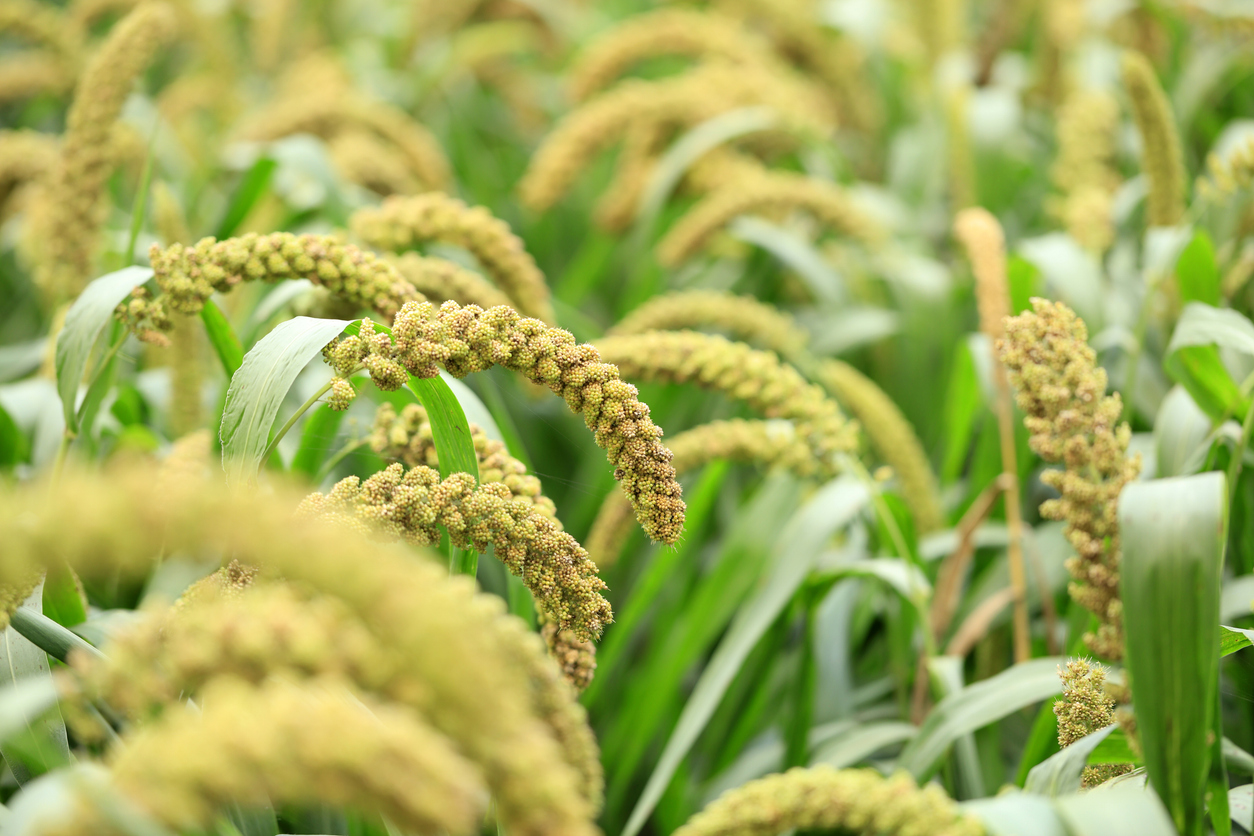
Researchers from Shanxi Agricultural University in China conducted a study to explore how a gene knockout in foxtail millet helps the plant become more resilient to extreme drought. Their findings are discussed in the latest issue of Plant Physiology and Biochemistry.
Foxtail millet (Setaria italica L.) is one of the oldest domesticated food crops and is known as a vital cereal crop in arid and semi-arid regions. It is highly nutritious because of the high levels of protein, fat, vitamins, and amino acids. When the plants are exposed to drought conditions, growth is impacted by reduced photosynthetic capacity, leading to lower crop yields.
To address the impact of drought in foxtail millet, the researchers focused on a gene called SiZAT12. When a millet plant is exposed to drought, this gene's activity is activated. However, it was found that this particular gene limits foxtail millet's resilience. Using CRISPR, they knocked out SiZAT12, and this resulted in better drought tolerance without a yield penalty. Furthermore, the edited plants also exhibited enhanced cold tolerance and germination rate under salt stress.
Read the research article in Plant Physiology and Biochemistry.
| |
You might also like:
- Pocket K No. 54: Plant Breeding Innovation: CRISPR-Cas9
- Scientists Release the Pan-Genome of Foxtail Millet
- The First Decade of CRISPR: Advances and Outlook
Biotech Updates is a weekly newsletter of ISAAA, a not-for-profit organization. It is distributed for free to over 22,000 subscribers worldwide to inform them about the key developments in biosciences, especially in biotechnology. Your support will help us in our mission to feed the world with knowledge. You can help by donating as little as $10.
-
See more articles:
-
Plant
- Gene Editing Enhances Oil Yield and Quality of Jatropha
- Gansu Agricultural University Researchers Modify Potato Gene to Boost Drought Tolerance
- EFSA Affirms Safety of GM Soybean GMB151 × DAS-44406-6
- SiZAT12 Knockout Improves Drought Tolerance in Foxtail Millet
- Europe's First Precision-Bred Oilseed Rape Moves to Commercial UK Farms
- USDA-APHIS Grants Non-Regulated Status to Two Gene-Edited Hemp Varieties
- Level Up Your Team's Biotech Updates Subscription
-
Environment
- Engineered Algae Captures Microplastics from Water
-
Read the latest: - Biotech Updates (September 16, 2026)
- Gene Editing Supplement (August 26, 2026)
- Gene Drive Supplement (February 22, 2023)
-
Subscribe to BU: - Share
- Tweet