

Scientists Engineer Wheat with Giant Starch Granules to Boost Health and Industry
July 8, 2026| |
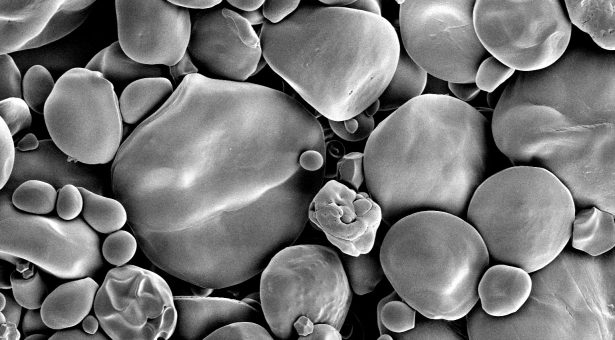
Scientists at the John Innes Centre have achieved a major biotechnological breakthrough by breeding durum wheat with "giant" starch granules that grow more than double their typical size. By unblocking two specific genetic limitations, increasing the internal storage space within the plant cells and reducing competition among developing granules, the research team successfully produced starch grains measuring up to 50 micrometers, compared to the standard 20 micrometers found in regular wheat.
This dramatic increase in granule size could soon revolutionize public health through the foods we eat every day. Because larger granules have a smaller relative surface area, they are much harder for human enzymes to break down, resulting in a slower digestive process. Researchers anticipate that using this specialized wheat to make everyday staples like pasta and bread will prevent the sudden blood sugar spikes often linked to obesity and type 2 diabetes, while simultaneously feeding the gut microbiome as a beneficial form of dietary fiber.
Beyond the grocery aisle, the super-sized starch opens up massive possibilities for several multi-million-pound manufacturing industries. In paper milling and packaging, these larger granules are significantly easier to separate, which greatly simplifies factory processing. The team is currently collaborating with the Quadram Institute to spin this proof-of-concept into actual pasta for upcoming human dietary trials, marking an exciting step from fundamental plant science to real-world industrial and health applications.
For more details, read the news article in the John Innes Centre News & Events.
| |
You might also like:
- Researchers Identify Gene Regulating Grain Weight in Wheat
- Study Reveals Gene that Reduces Wheat Grain Weight
- Starch Discovery has Benefits for Brewing, Baking, and Milling Industries
Biotech Updates is a weekly newsletter of ISAAA, a not-for-profit organization. It is distributed for free to over 22,000 subscribers worldwide to inform them about the key developments in biosciences, especially in biotechnology. Your support will help us in our mission to feed the world with knowledge. You can help by donating as little as $10.
-
See more articles:
-
Plant
- Gene Editing Boosts Soybean Yield Under Dense Planting
- Scientists Engineer Wheat with Giant Starch Granules to Boost Health and Industry
- Researchers Confer Resistance to Bacterial Blight in Rice Using CRISPR
- ASCA2026: Early Bird Registration Now Open
- UK Approves Gene-Edited Safer Wheat in Landmark Precision Breeding Milestone
- First Five-Bt Protein Soybean Shows Strong Protection Against Major Caterpillar Pests
-
Environment
- Researchers Call for Stronger Biosafety Rules for GE Microalgae Biofuels
- Ukraine Becomes 156th Member of Global Plant Genetic Resources Treaty
-
Read the latest: - Biotech Updates (September 23, 2026)
- Gene Editing Supplement (August 26, 2026)
- Gene Drive Supplement (February 22, 2023)
-
Subscribe to BU: - Share
- Tweet