

Scientists Discover Gene to Help Rice Escape Heat and Protect Yields
June 17, 2026| |
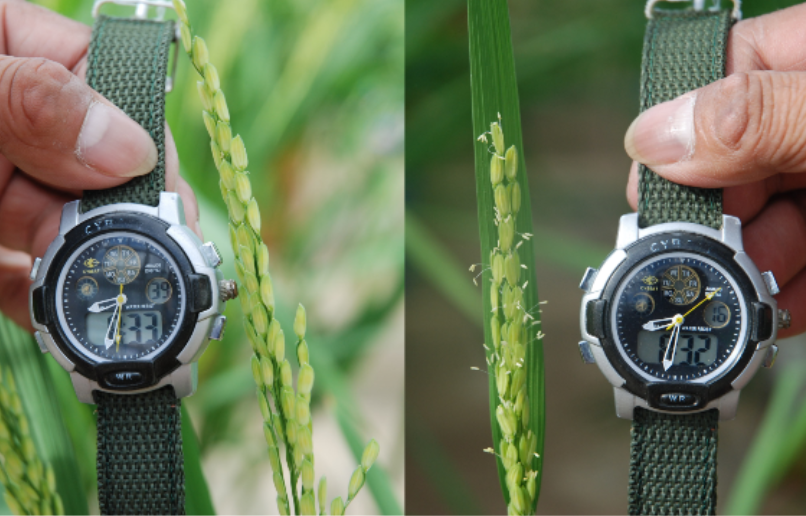
In a significant breakthrough for global food security, scientists from Japan's National Agriculture and Food Research Organization (NARO), other Japanese research institutions, and the International Rice Research Institute (IRRI) have discovered a gene that enables rice to avoid heat stress. The gene, known as EMF3 (Early Morning Flowering 3), prompts rice plants to flower earlier in the day when temperatures are cooler. This shift helps the plant bypass the peak heat hours of 10:00 AM to noon, when high temperatures disrupt fertilization and cause grain sterility.
The discovery centers on a rare variant of the gene, called emf3-1D, which shifts flowering time by approximately 1.5 hours. According to the research team, this modification is highly effective because it acts specifically on the flower-opening mechanism without negatively impacting the plant's overall growth or productivity under normal conditions. By protecting the most vulnerable stage of the rice plant's development, this discovery ensures that farmers can maintain stable yields even in the face of increasingly frequent heat waves and global warming.
Researchers are already working to integrate the emf3-1D allele into widely grown rice varieties, including IR64, Swarna, and Pusa Basmati, using marker-assisted selection and advanced gene-editing techniques like prime editing. Scientists believe this breakthrough offers a practical and scalable tool for breeding climate-resilient rice crops globally. As climate change continues to threaten production in tropical and subtropical regions, this "early riser" trait provides a promising pathway to secure harvests for farmers and improve food stability.
For more details, read the news article in IRRI News.
| |
You might also like:
- Study Shows Rising Temperatures Hurt Rice Yields
- Experts Recommend Climate-adaptive Breeding Pipeline for Rice
- Gene-edited Japonica Rice Shows Improved Grain Size and Heat Resilience
Biotech Updates is a weekly newsletter of ISAAA, a not-for-profit organization. It is distributed for free to over 22,000 subscribers worldwide to inform them about the key developments in biosciences, especially in biotechnology. Your support will help us in our mission to feed the world with knowledge. You can help by donating as little as $10.
-
See more articles:
-
Plant
- AI Model Maps How Gene Switches Control Plant Traits and Crop Stress Response
- CRISPR Boosts Potato Resistance to Late Blight Disease
- European Parliament Approves New Rules for Genomic Techniques in Agriculture
- Researcher Develop Rapid Transformation Method to Improve Finger Millet
- Scientists Discover Gene to Help Rice Escape Heat and Protect Yields
-
Health
- Therapeutic Benefits Drive Public Support for Genome Editing in Saudi Arabia
-
Environment
- ISAAA and MABIC Announce 2026 Asian Short Course in Malaysia
- Researchers Develop Sustainable Bioplastic from Potato Starch
-
Read the latest: - Biotech Updates (September 23, 2026)
- Gene Editing Supplement (August 26, 2026)
- Gene Drive Supplement (February 22, 2023)
-
Subscribe to BU: - Share
- Tweet